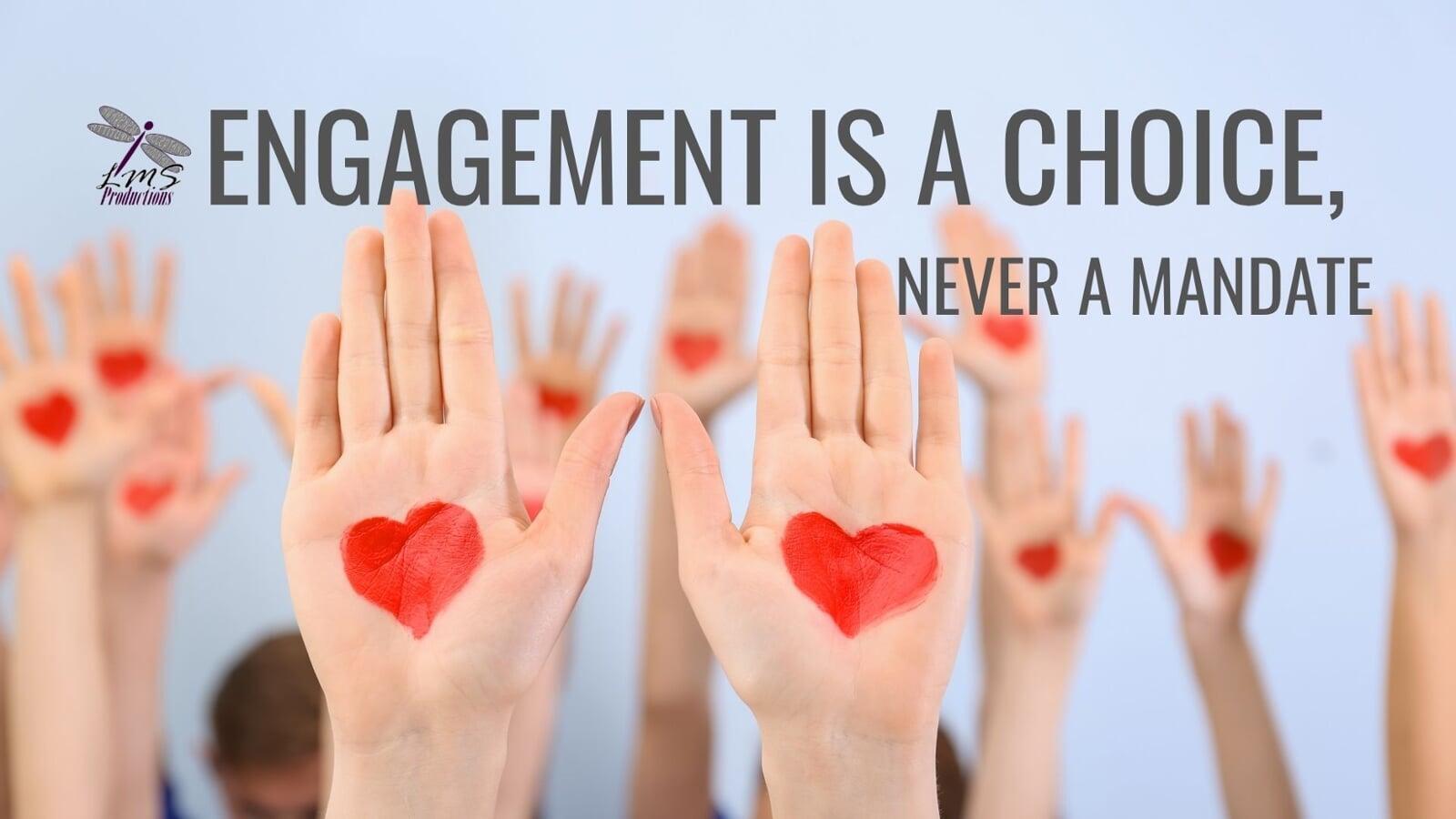
Why it’s time to rethink how we define engagement in our organizations.
What Engagement Is Not
These are behaviors of compliance, not engagement.
My Approach: Engagement as a Choice
In my work, I help organizations understand that engagement starts on the inside. It begins when individuals make the conscious decision to lean in — mentally, emotionally, and energetically.
That choice is influenced by:
- Emotional Intelligence – Awareness of your own mindset and how your participation affects others
- Environment – Whether you feel psychologically safe, respected, and empowered
- Relevance – Whether the conversation or task feels meaningful to you
When we understand engagement this way, we stop trying to make people engage, and start inviting them to matter.
Why This Matters for Organizations
When engagement is treated like an attendance metric, leaders miss the bigger opportunity.
But when teams are encouraged to engage with purpose:
- Meetings become conversations, not monologues
- Collaboration improves because people feel heard
- Innovation increases because people feel safe contributing ideas
- Burnout decreases because people aren’t just going through the motions — they’re connected to the why
You don’t need more rules, rewards, or rah-rah to improve engagement. You need to create the conditions where people choose to bring their full selves.
Engagement Is contagious. One person choosing to participate with purpose can change the tone of an entire room. That’s the ripple effect of meaningful engagement — and why it’s worth investing in both personally and organizationally.
Ready to Rethink Engagement?
If you’re looking to boost performance, collaboration, or morale — stop asking how to get people to “engage more.” Start creating environments that invite people to choose it. Because when people engage with purpose, better outcomes naturally follow.