
Are you playing your chips wisely?
High-performing professionals are often rewarded for speaking up, jumping in, and getting things done. So we do more of it. We answer quickly. We offer solutions. We fill the gaps.
At one point in my career, I thought that was how you got ahead. What I didn’t realize was that my constant contribution wasn’t just helping. In some cases, it was creating resentment. It was discouraging others from engaging. And it was quietly training people around me to pull back.
Over-contributing often looks like commitment, but it can feel like crowding to the people around you.
That’s the problem this idea addresses.
This week, an email crossed my path asking a question that hit closer than I expected: Are you over-contributing? It referenced the idea of “playing fewer chips,” and it stuck with me because I’ve lived the other side of that lesson.
In No-Limit Hold ’Em, every chip you play is a choice. You’re not obligated to act just because it’s your turn. Strong players understand that restraint isn’t passivity, it’s strategy.
Workplaces aren’t much different. Over-contributing often comes from positive intent. You care. You’re capable. You want to add value. But emotional intelligence asks a harder question:
What is the impact of my contribution on the people around me?
When one person consistently jumps in, others don’t stop sharing because they lack ideas. They stop because the space to contribute disappears. Over time, engagement drops, trust erodes, and collaboration becomes uneven.
Here’s what shifted for me: I stopped measuring my value by how often I spoke and started paying attention to when my voice actually mattered. Playing fewer chips didn’t make me less effective. It made my contributions clearer, more intentional, and more influential. It also created room for others to step forward, take ownership, and feel respected.
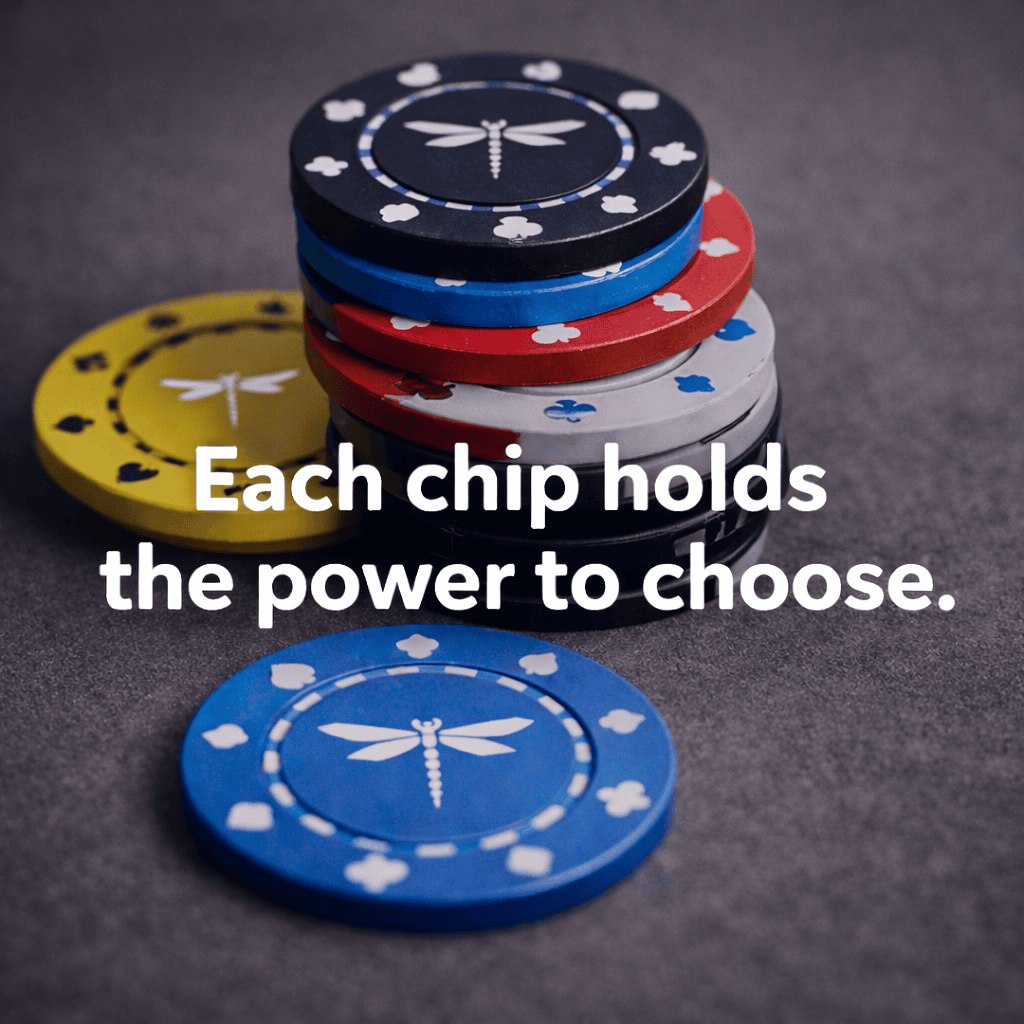
Each chip holds power. The difference is learning to use that power intentionally.
That’s emotional intelligence in practice. Awareness of self. Awareness of others. And the discipline to choose, not react.
That’s the problem this idea addresses.
What is the impact of my contribution on the people around me?
Each chip holds power. The difference is learning to use that power intentionally.
Try This:
In your next meeting, give yourself a small stack of chips, physically or metaphorically. Three or four is plenty. Each time you speak, offer an idea, or jump in to solve something, it costs you one chip. When they’re gone, you listen. Pay attention to what changes.
Notice who steps forward when you don’t
Notice how carefully you choose your moments
Notice how the weight of your contributions increases when they’re no longer constant
Because influence isn’t built by playing every hand.
It’s built by knowing when to act, when to wait, and owning the power to choose.